



Why Should International Investors Carefully Review Turkish Lease Agreements?
Foreign investors purchasing residential property in Turkey in 2026 are discovering that the details in lease agreements directly determine the long-term success of their rental yields. Investors from Europe, the Gulf, and Central Asia in particular must fully understand the rules and risks unique to the Turkish legal system. This article clearly outlines the critical differences between international standards and Turkish practice.
Lease Term and the Risk of Automatic Renewal
In Turkey, the legal term for residential lease agreements is typically one year. However, longer-term contracts are also permitted. The most common issue faced by international investors is the tenant exercising their “automatic renewal” right under the Turkish Code of Obligations when the term expires.
This creates a significant risk, especially for institutional investors expecting a 5+5 or 10-year rental guarantee. Clearly stating “no indefinite extension” or “fixed-term agreement” in the contract greatly reduces potential future legal disputes.
Security Deposit Amount, Refund, and Bank Guarantee
As of 2026, security deposit practice in Turkey remains limited to a maximum of three months’ rent. However, since international investors usually seek higher protection, taking the deposit in the form of a bank letter of guarantee or blocked account has become a much safer approach.
The biggest problems with deposit refunds arise from damage left by the tenant and unpaid service charges. For this reason, including clauses requiring “an independent expert report for deposit refund” and “refund within 30 days” protects the investor.
| Region | % |
|---|---|
| Turkey | %22.34 |
| Istanbul | %18.5 |
| Ankara | %25.1 |
| Izmir | %24.2 |
Source: CBRT
Rent Increase Rate and Currency-Linked Agreements
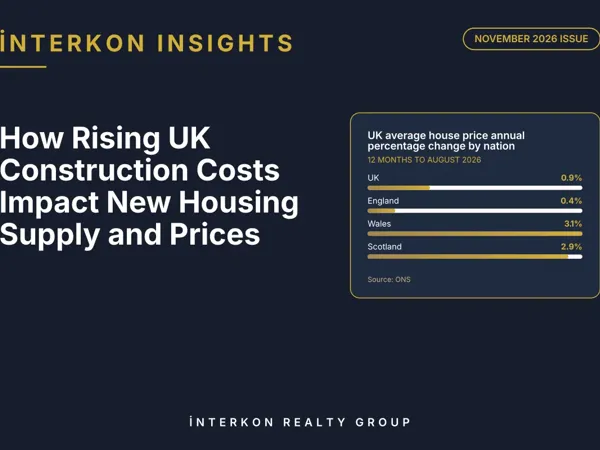
According to September 2026 data, the Housing Price Index across Turkey rose by 22.34% annually, while the annual increase in construction costs stood at 30.8%. In this environment, fixed TL rent increase clauses leave investors unprotected against inflation.
International investors generally prefer to structure rent increases as CPI plus a fixed margin or indexed to a specific exchange rate (USD/EUR). However, as of 2026, Turkish law continues to prohibit setting rent in foreign currency. The most commonly used and court-approved method is therefore clauses formulated as “payable in TL, equivalent to USD/EUR at the CBRT effective selling rate on the payment date.”
Arbitration and Jurisdiction in Dispute Resolution
One of the most critical issues for foreign investors is which court will have jurisdiction in the event of a dispute and which law will apply. In Turkey, disputes concerning immovable property are subject to the mandatory jurisdiction of Turkish courts and Turkish law.
For this reason, adding an “arbitration” clause to the contract and specifying that arbitration will be conducted under the Istanbul Arbitration Centre (ISTAC) or an international institution both speeds up the process and strengthens the perception of impartiality. Investors from European Union countries in particular also prefer to include an “English original text” provision in the agreement.
Checklist Before Making an Investment Decision
- Is the contract for a fixed term or an indefinite term?
- Is the security deposit secured by a bank guarantee or blocked account?
- Is the rent increase formulated with currency indexing?
- Is the damage inspection and deposit refund procedure clearly defined?
- Is there an arbitration clause for disputes, and which institution is authorized?
- Has the contract been prepared in both Turkish and English, with a clause stating “the English text is binding”?
Investors who meticulously check these elements both protect their rental income and minimize potential legal risks. With housing price increases of 18.5% in Istanbul, 25.1% in Ankara, and 24.2% in Izmir as of September 2026, well-structured lease agreements make returns far more predictable.

Frequently Asked Questions
Can international investors sign lease agreements in USD in Turkey?
No. As of 2026, directly setting rental amounts in foreign currency for residential leases in Turkey is prohibited. However, contracts can be prepared using a USD-based indexing formula tied to the exchange rate on the payment date. Professional legal advice should always be obtained regarding the validity of this method.
What is the maximum number of months’ rent that can be taken as a security deposit?
Under the Turkish Code of Obligations, the security deposit cannot exceed three months’ rent. If a higher amount is demanded, the tenant may object. For this reason, international investors generally prefer a bank letter of guarantee as additional security.
Is including an arbitration clause valid in Turkey?
Yes. ISTAC arbitration, in particular, is increasingly preferred in residential lease disputes. An arbitration clause prevents cases from dragging on for years and provides both local and foreign investors with significant time and cost advantages.
This content has been prepared solely for informational purposes by INTERKON REALTY GROUP and INTERKON INSIGHTS. Data has been compiled from publicly available sources of official institutions (CBRT, TURKSTAT). Depreciation periods are calculated based on gross yield. This article does not constitute investment advice. Professional consultancy is recommended before making any investment decision. INTERKON REALTY GROUP and INTERKON INSIGHTS cannot be held responsible for any losses arising from the use of this information.