




The Rare Relationship Kocataş Mansion Has Built with the Sea
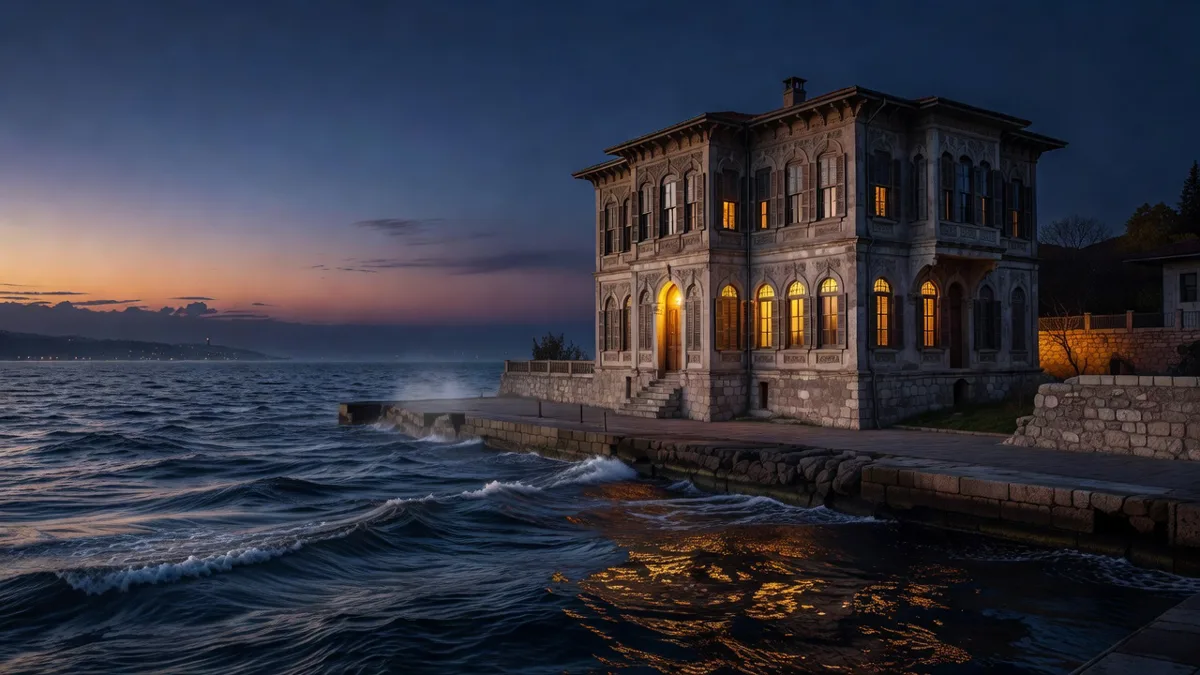
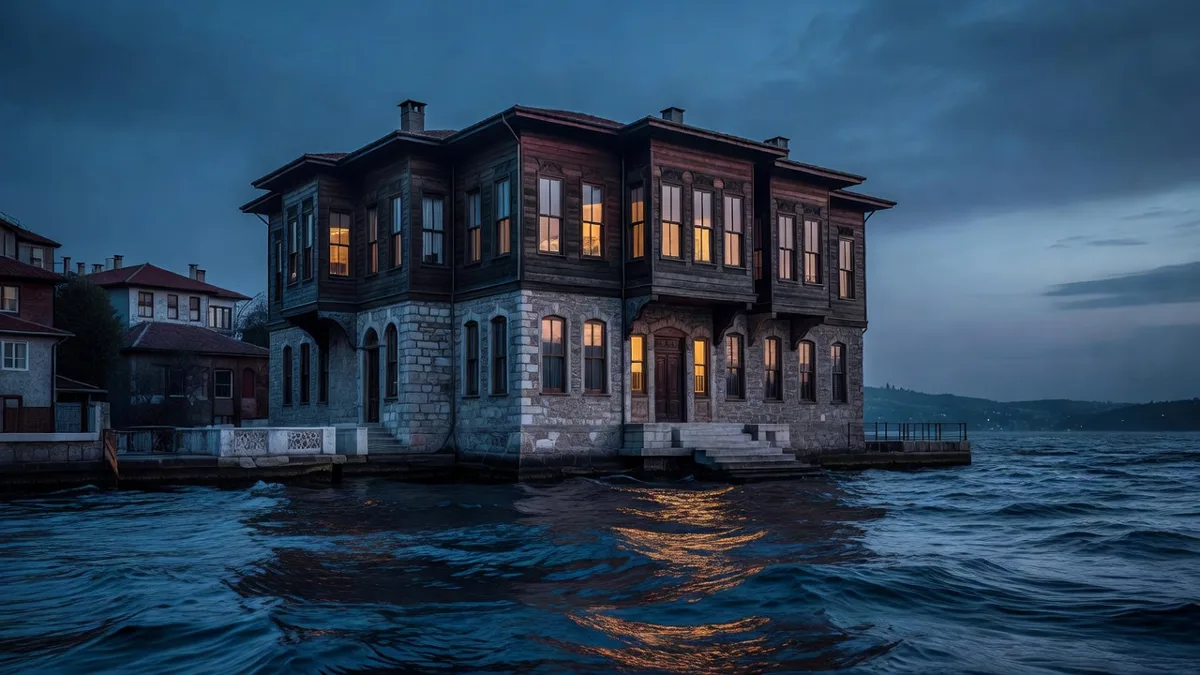
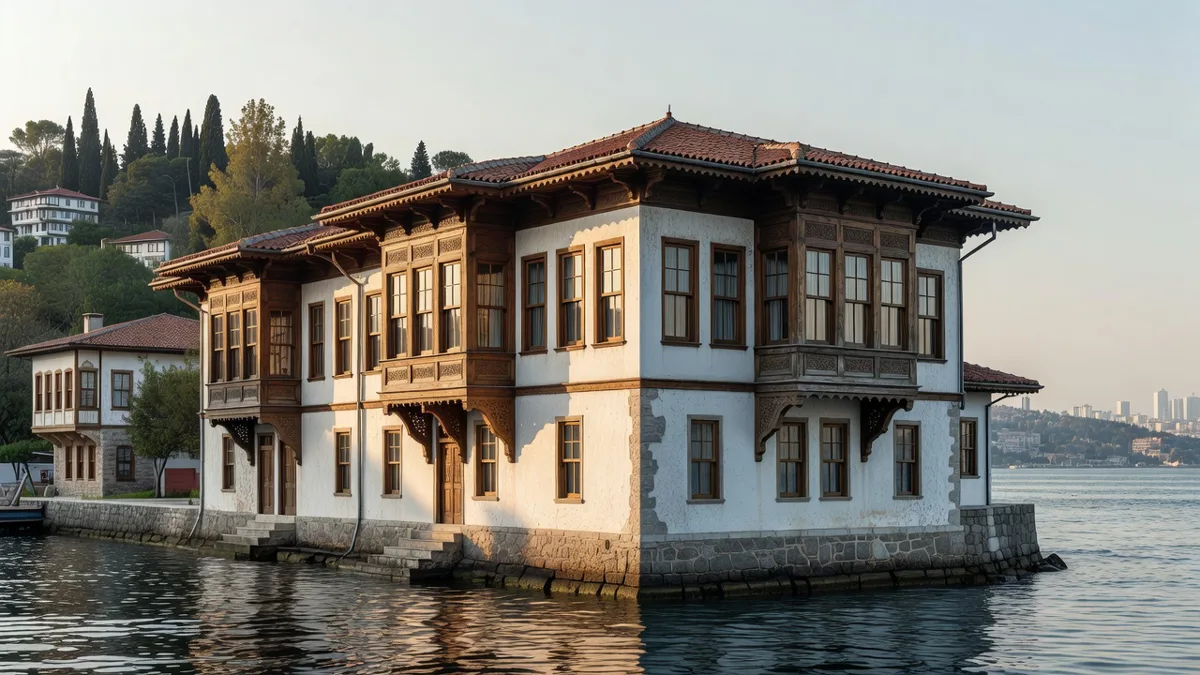
Located in the Kocataş neighbourhood of Sarıyer, at one of the narrowest and fastest-flowing points of the Bosphorus. Unlike many other waterfront mansions, its seafront facade is designed almost seamlessly with the water rather than being separated by terraces and high quays. This becomes especially evident in winter when the southwesterly wind hits, revealing what a bold example of engineering the structure truly is.
Used as a private residence for many years, the mansion has recently been restored and now hosts corporate events and private gatherings. However, most of the original wooden cladding on the exterior still remains in place.
What is most striking here is the mansion’s steadfast stance against the Bosphorus current. While other mansions are usually situated in more sheltered bays, Kocataş Mansion stands like a sentinel right in the middle of the flow.
Typical Facade Layout of the Late Ottoman Period
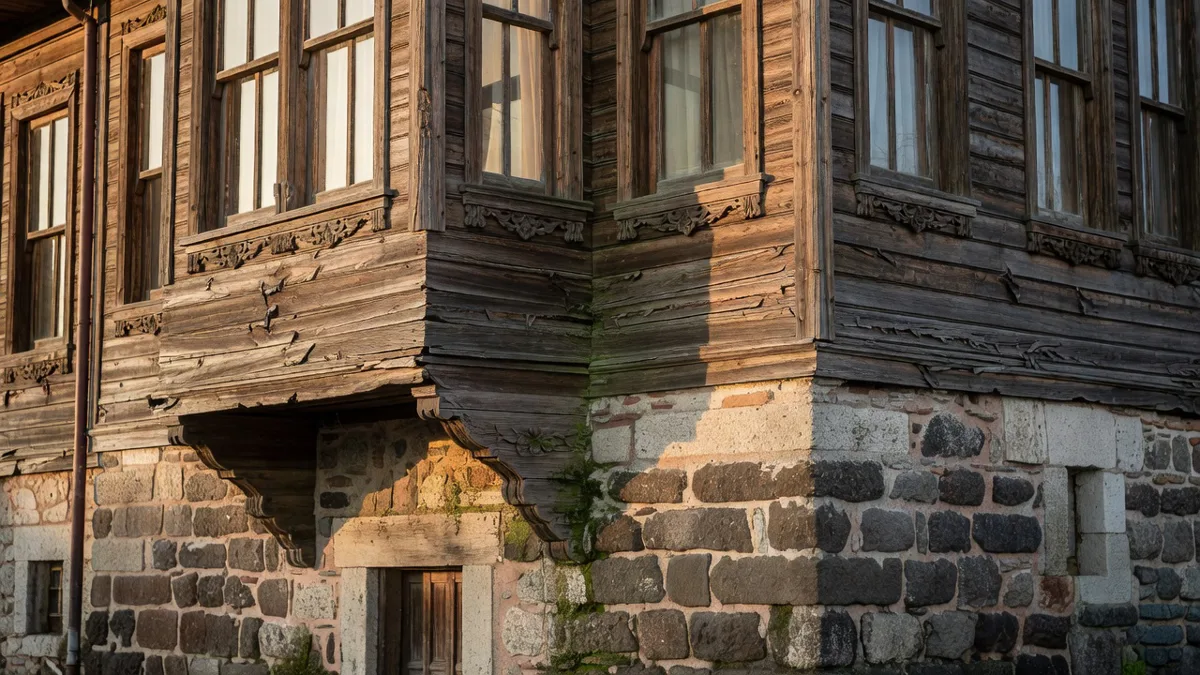
It carries the most characteristic features of 19th-century Bosphorus mansion architecture. The three-storey structure features symmetrically arranged windows along its seafront and a prominent wide bay window on the second floor. This bay window was designed both to draw the Bosphorus view deep into the interior and to make the mansion appear more imposing from the water.
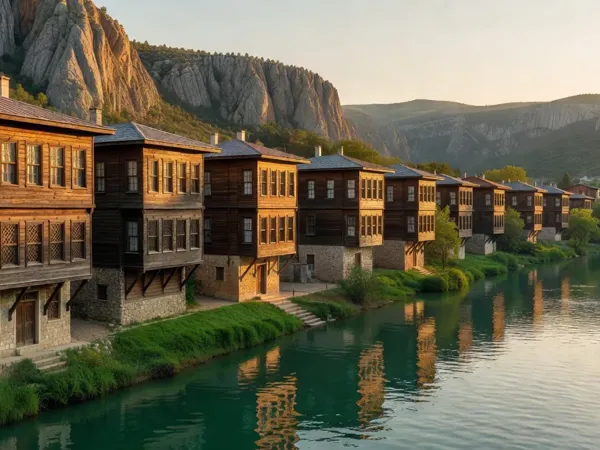
The wooden craftsmanship is exceptionally detailed. The carved motifs beneath the eaves and the geometric patterns on the bay window railings reflect the high-quality workmanship of the period’s master builders. The stone foundation, built from local Sarıyer stone, was made thick to withstand moisture and wave action.
The projecting corner bay windows on the side facades represent a classic solution, chosen both to maximise natural light and to create distance from neighbouring mansions.
Hidden Details in the Garden and Quay Design
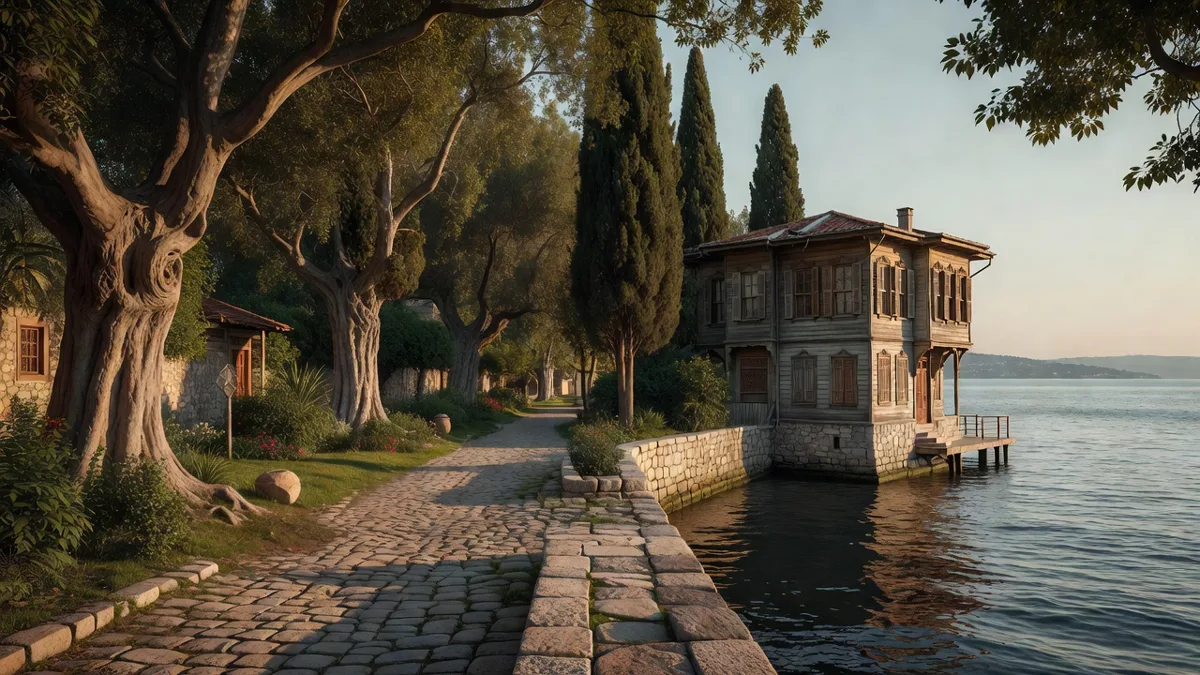
The garden of Kocataş Mansion is relatively narrow compared to other Bosphorus waterfront properties. Yet the transition between the quay and the garden is masterfully executed. The quay stones are precisely cut, while the wave-breaking section has gained a natural texture over time with moss growth.
The mature plane and cypress trees in the garden appear to have been planted almost at the same time as the mansion itself. Especially on summer evenings, when you look out from the quay toward the Bosphorus, the silhouette of the mansion combined with these trees creates a picture-postcard view.
The iron jetty on the sea side, though not original, has been restored in keeping with the period. Approaching by boat from here allows you to truly appreciate the mansion’s grandeur.
The Floor Plan Still Preserved Inside
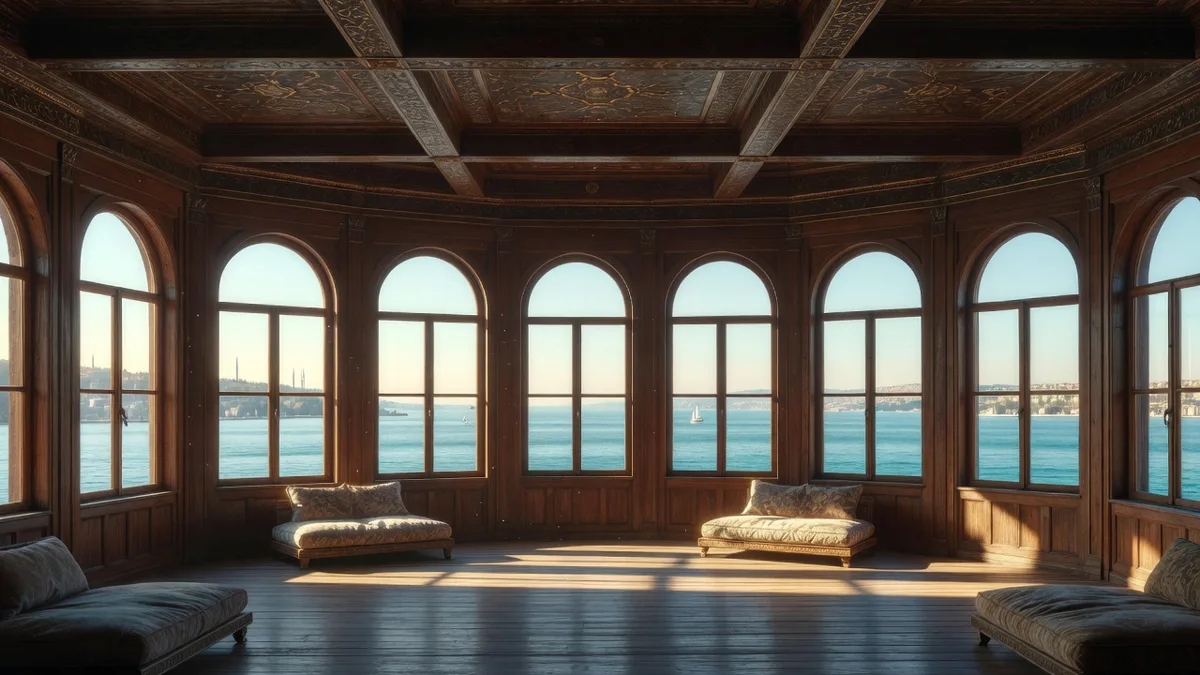
The interior layout preserves the classic “hayat” concept of traditional Bosphorus mansions. The ground floor is dedicated to service and storage areas, while the main living spaces are on the second and third floors. The spacious central hall and the rooms opening onto it allow both family life and breathtaking Bosphorus views to coexist.
The row of windows along the seafront of the large salon on the second floor offers such a powerful view that you almost forget you are indoors. Some of the painted decorations on the ceilings are original, and great care was taken during restoration.
The stairwell is also highly distinctive. The narrow, tall shaft-like staircase was cleverly designed to provide both natural light and ventilation.
For Those Who Wish to Visit Kocataş Mansion Today
The mansion is not currently open to regular visitors outside of private events. However, you can catch a close view of its exterior while driving along the Sarıyer coastal road, especially in the early morning or during the golden light of late afternoon. The best views are from across the water, from the Rumeli Hisarı direction, or from a boat.
For those who appreciate mansions from this era, Kocataş Mansion is one of the rare examples that has not been over-restored and still defiantly faces the true currents of the Bosphorus. This gives it both architectural and emotional impact.
If you are looking for a “real” Bosphorus mansion, you need to experience Kocataş Mansion in person, not just in photographs. Because this building is made not only of wood and stone, but of a century-old dialogue with the Bosphorus itself.