



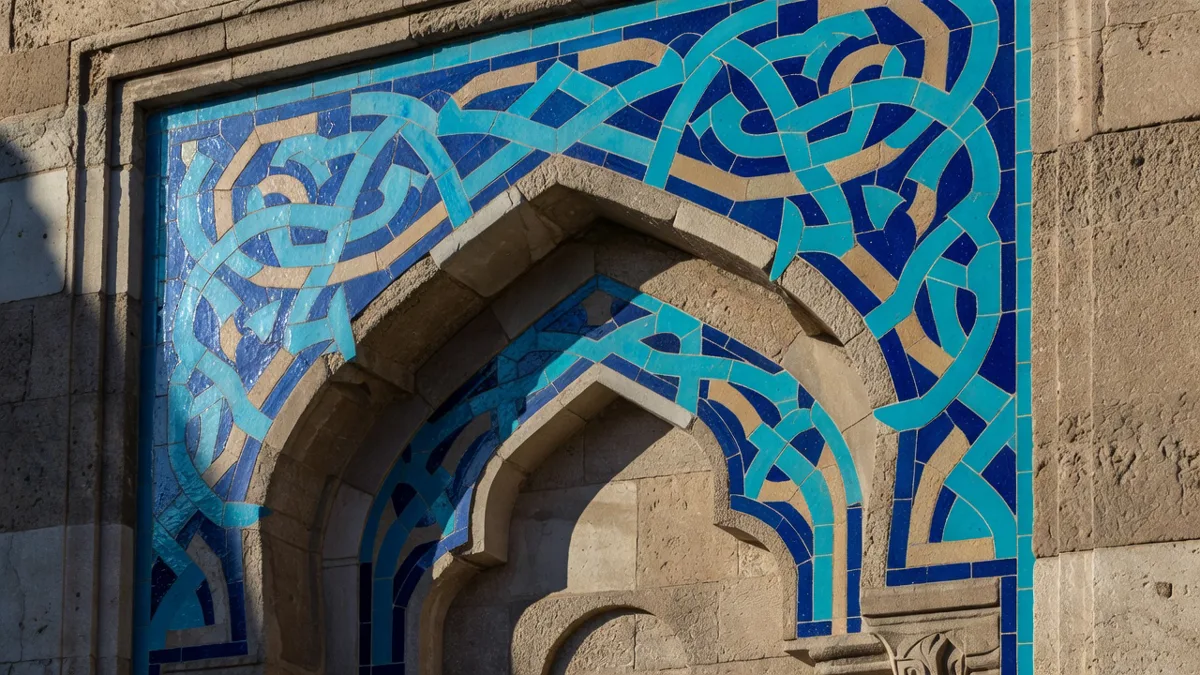
Approaching Karatay Medrese
When you turn left off Karaman Avenue and walk alongside the old city wall ruins, it suddenly appears before you. The stone walls have taken on the patina of time, yet the tiled frieze around its doorway still gleams as brightly as the day it was created. Especially on winter afternoons when the sun is low, the turquoise and navy tones seem to set the wall ablaze.
Daily life flows on in the streets right beside the medrese. Elderly gentlemen sit in their doorways, children play ball in the street. Far from feeling like a tourist museum, this is a building deeply woven into the everyday life of Konya.
Every time you come here you feel the same thing: those who passed through this doorway 800 years ago probably felt the very same sense of wonder.
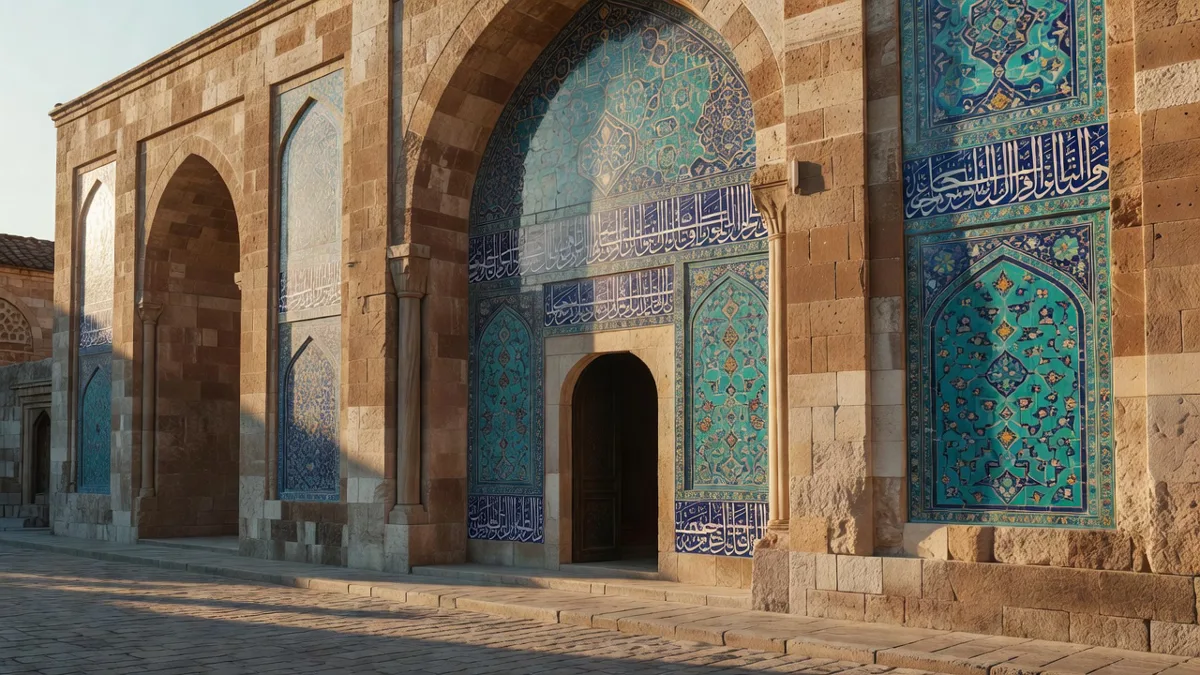
The Story in the Tiles
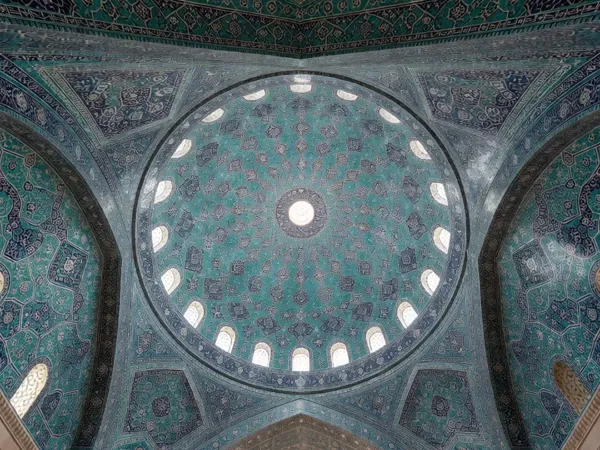
The real power of Karatay Medrese lies in the tiled panels at the dome transitions and around the mihrab. The geometric patterns are so flawless that you could stare at them for hours. The star motifs created with the “kündekâri” technique in particular represent the pinnacle of Seljuk art.
What stands out most in these works, which combine different shades of turquoise with navy and white, is the quality of the underglaze technique. It is still astonishing that such advanced tile production was achieved in Konya in the 13th century.
During restorations, the original pieces have been carefully preserved. In some areas you can see 800-year-old tiles placed right next to sections completed in the 20th century. This gives the building a special warmth and authenticity.
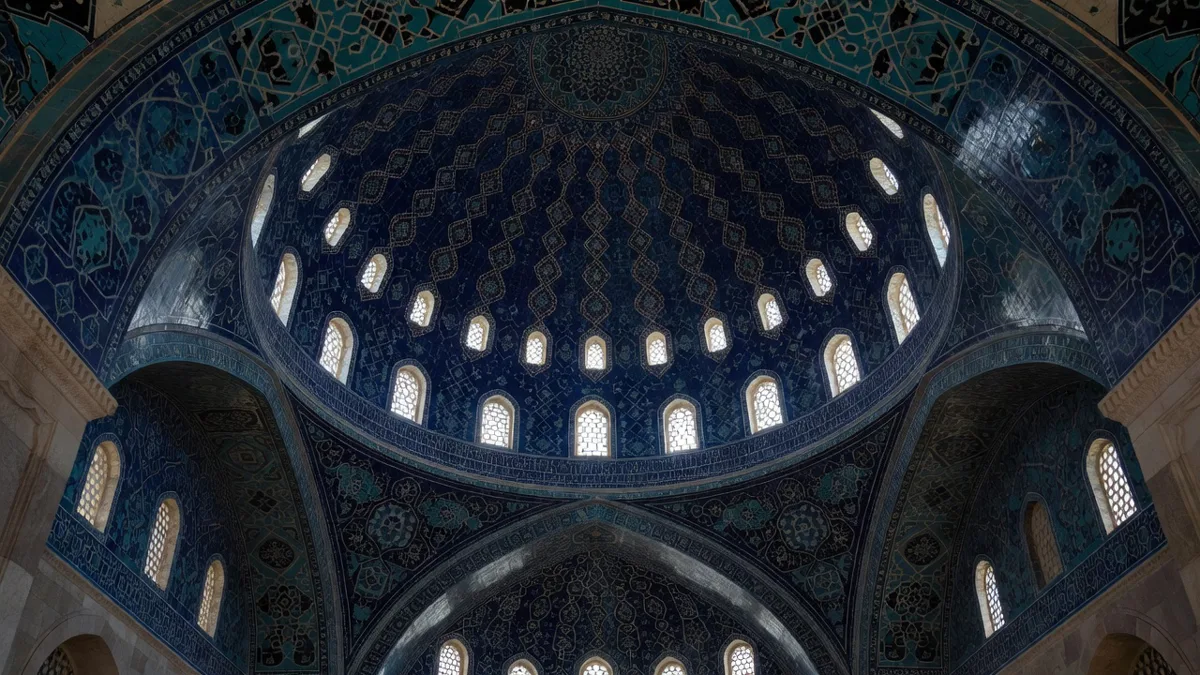
A Winter Day Inside the Medrese
Inside it is cool. When you stand beneath the dome, even sound echoes differently. Light filters through the small windows above, falling onto the tiles and making the walls feel almost alive.
What I like most here is how few tourists there are. Especially on weekday mornings, the medrese is almost yours alone. Simply sitting in a corner and following the patterns in the tiles brings a strange sense of peace.
When you step back outside, the everyday rhythm of Karatay immediately embraces you. The smell of fresh bread drifts from the bakery 200 metres away, and winter vegetables are neatly arranged on the greengrocer’s stall.
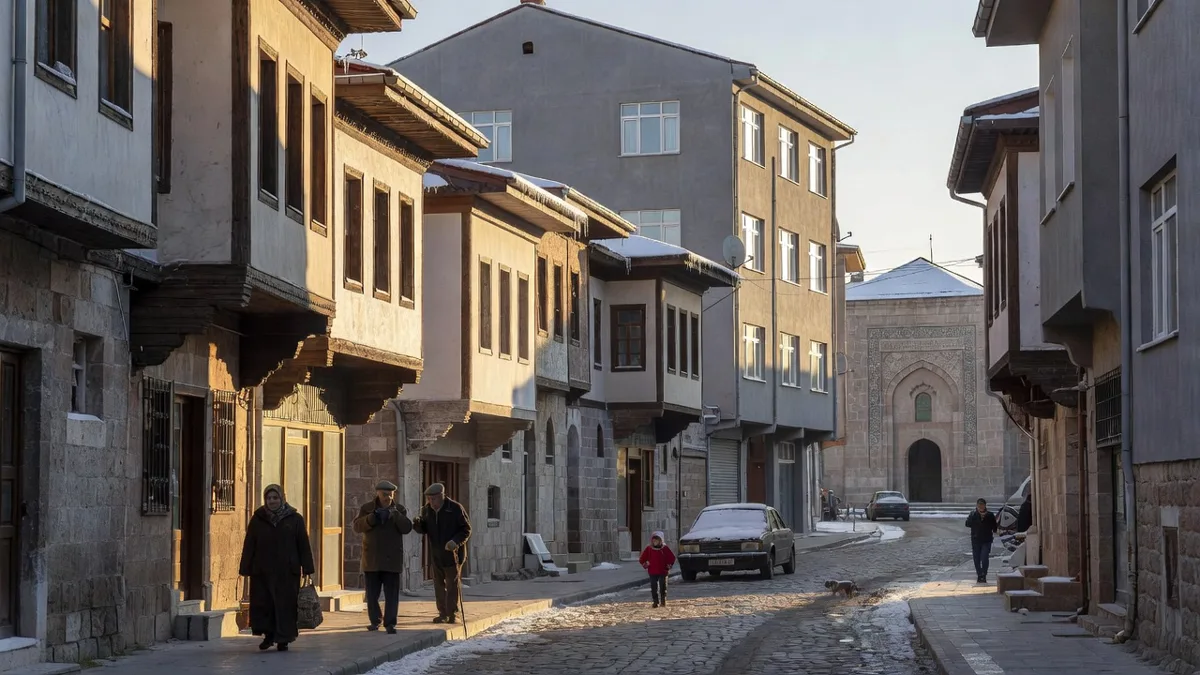
What’s It Like to Live in the Area?
The neighbourhood where Karatay Medrese stands is one of Konya’s oldest settlements. Narrow streets, remnants of traditional Konya houses and modern apartment buildings stand side by side. It is still a place where neighbourly bonds remain strong.
Local residents refer to the medrese as “our medrese”. Children play here from a young age, and older residents glance at it while chatting in their doorways on summer evenings.
It is also quite central in terms of transport. Alaaddin Hill is a 12–15 minute walk away, and the Mevlana Museum is about 20 minutes on foot. Parking, however, is a serious issue; the narrow streets can become blocked, especially on Friday evenings.
What I Noticed When Looking Closely at the Tiles
The blue tone used in the tiled frieze on the medrese’s north wall is richer than in any other Seljuk work. When the light changes, the colour almost turns to purple. I have watched this transition many times.
The symmetry in the patterns is so powerful that from certain angles it feels as if the entire dome is rotating. It is a deliberate architectural illusion.
This is more than just a museum. It is one of the rare places where Konya’s thousand-year memory still lives and breathes. Every visit reveals a new detail.
What to Do After Leaving the Medrese
Sit at the little café right behind the medrese. Sip your tea while watching the reflections of the tiles on the wall. Then take a slow stroll through the narrow streets of Karatay. Perhaps the real story begins there.